How a Tiny Island Nobody Believed In Became Richer Than America
The day a nation was born in tears
Picture this. August 9th, 1965. A man sits before a television camera, and he weeps. Not tears of joy. Tears of despair. His country has just been thrown out like unwanted garbage, left to survive on a swampy island with no water, no resources, and absolutely no hope.Fifty years later, that same island would become one of the richest places on Earth.This is the story of Singapore. And honestly? It’s the most inspiring underdog story you’ve never fully heard.https://logicloops.net/blog/
When Everyone Said “You’re Going to Die”
Let me paint you a picture of Singapore in 1965. They had just been kicked out of Malaysia. No natural resources. Smaller than New York City. Unemployment through the roof. Surrounded by neighbors who genuinely hated them. And get this, no army to speak of.Every expert, every politician, every observer looked at this tiny island nation and basically said the same thing: good luck surviving.They weren’t being mean. They were being realistic. On paper, Singapore had absolutely nothing going for it.
How a Tiny Island Nobody Believed In Became Richer Than America
The Fishing Village That Caught Britain’s Eye
But let’s rewind a bit to understand how this mess began.For centuries, Singapore was nothing special. Just a sleepy fishing village where people caught fish and avoided pirates. Then in 1819, a British gentleman named Stamford Raffles showed up and saw something nobody else did.Location.Singapore sat right at the southern tip of the Malay Peninsula, perfectly positioned between the Indian Ocean and the South China Sea. Every ship traveling between Europe, India, and China had to pass through here. It was like owning a toll booth on the world’s busiest highway.Under British rule, Singapore transformed. Chinese, Indian, and Malay immigrants flooded in looking for opportunities. The population exploded. Singapore became one of Britain’s crown jewels in Asia, a vibrant, bustling port city making everyone rich (especially the British, but still).Everything was going beautifully. Until it wasn’t.
The Embarrassment That Changed Everything
Here’s where history gets painfully ironic.The British had built massive 15-inch naval guns pointing at the sea. They were absolutely certain any attack would come from the water. They were so confident, so sure of themselves.The Japanese came through the jungle instead.In February 1942, Singapore fell in what Winston Churchill called “the worst disaster in British military history.” The mighty British Empire, protectors of Singapore, had left their entire backside exposed. That single blind spot cost them everything.For three and a half brutal years, Singapore suffered under Japanese occupation. Tens of thousands died. Food was scarce. Hope was even scarcer.When the war ended in 1945, the British returned. But something had fundamentally changed in the hearts of Singaporeans. They had watched their “invincible” protectors get demolished in less than a week.
The question began forming: why do we need them anymore?
How a Tiny Island Nobody Believed In Became Richer Than America
The Merger That Was Destined to Fail
Independence movements grew. But here’s the complicated part. Singapore was tiny, mostly Chinese, surrounded by Malaya, which was mostly Malay. The British, looking to exit gracefully, thought merging them together would solve everything.In 1963, Singapore joined with Malaya, Sabah, and Sarawak to form Malaysia. It seemed brilliant on paper. Singapore would get access to natural resources. Malaysia would get Singapore’s economic expertise.Almost immediately, everything fell apart.Racial tensions exploded. Riots broke out. People died. The Malaysian government wanted policies favoring one group. Singapore’s leadership wanted equality for all races. These visions were fundamentally incompatible.Finally, in 1965, Malaysia’s Parliament did something unprecedented. They voted to expel Singapore.Kicked out. Thrown away. Left to die.
The Impossible To-Do List
So there stood Singapore. Independent, yes. But also terrified. Let’s look at what they faced:No natural resources. Not oil. Not minerals. Not even enough fresh water to survive. No military. Surrounded by larger, suspicious neighbors. Sky-high unemployment. Racial tensions still simmering. An economy completely dependent on British military bases that might leave any moment.The odds of survival? Honestly, almost none.But here’s where the story gets extraordinary
Turning Nothing Into Everything
Singapore had exactly one advantage: location. Ships were still passing through. If Singapore could become THE port, THE trading hub, THE financial center of Southeast Asia, maybe survival was possible.But first, some rather significant problems needed solving.The water crisis. Singapore couldn’t even sustain itself with fresh water. If Malaysia ever got angry and turned off the tap, people would literally die of thirst. So they built reservoirs everywhere. Every building’s roof became a water collector. They invested in technology to turn seawater into drinking water, something experts said was impossible at the time.The economic transformation. In the 1960s, most developing countries put up trade barriers and told foreign companies to leave. Singapore did the exact opposite. Zero corruption. Efficient government. Low taxes. Rule of law. They invited every foreign company to set up shop. They became the bridge between east and west.
Other developing countries called them sellouts. But Singapore didn’t care about looking good. They cared about survival.The housing revolution. Most Singaporeans lived in actual slums. Overcrowded, unsanitary, fire-prone nightmares. The government launched perhaps the most ambitious public housing program in history.But here’s the genius part. They didn’t just give people homes. They made homes affordable to buy through a forced savings system. Every worker saved part of their salary and could use those savings to purchase their government-built apartment.People owned their homes. They had stakes in their country. The government got money back to build more housing. Everyone had retirement savings.By the 1980s, over 80% of Singaporeans lived in public housing that they owned. Find me another country on Earth that achieved that.
The education obsession. With no natural resources, people became the resource. Schools were built everywhere. English became the language of instruction, controversial but strategic. Their children would become fluent in English and their mother tongue, able to do business anywhere in the world.The poisonous shrimp defense. With no military and larger neighbors all around, Singapore had to make invading them painful. Every male citizen would serve in the military. Everyone would learn to fight. The message was clear: attack us if you want, but it will cost you dearly.
The Results That Shocked the World
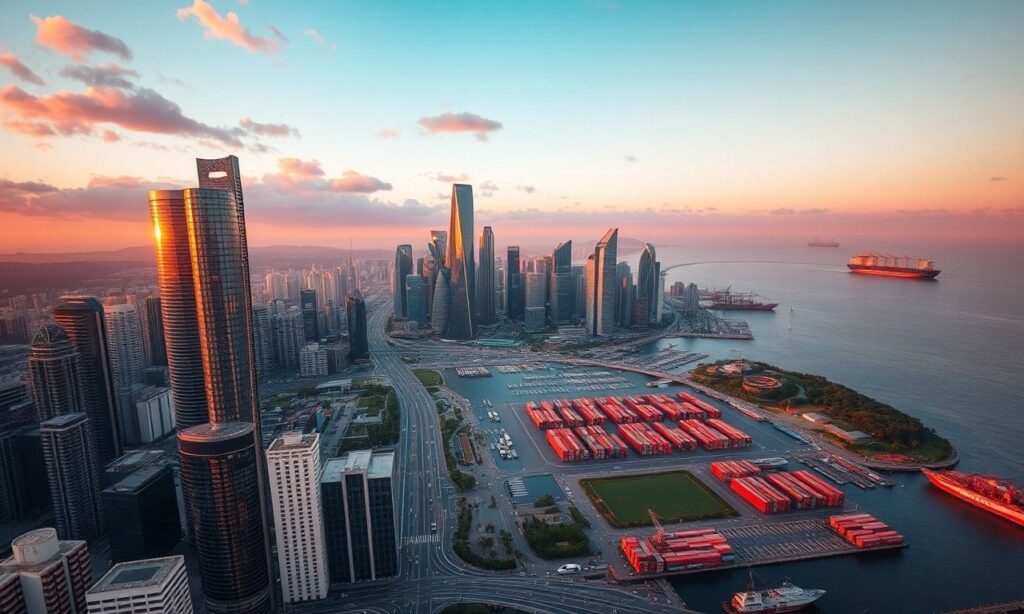
By the 1970s, foreign companies were flooding into Singapore. The port expanded. New industries sprouted. The economy grew at double-digit rates.What happened next almost defies belief.By the 1990s, Singapore’s GDP per capita exceeded Britain’s. The country that had colonized them. The slums were gone, replaced by gleaming high-rises. The port became one of the busiest in the world. The airport became world-class.Today, the average person in Singapore is wealthier than the average American.From third world to first world in a single generation. From tears on television to economic powerhouse. From “you’re going to die” to “how did you do that?”