Table of Contents
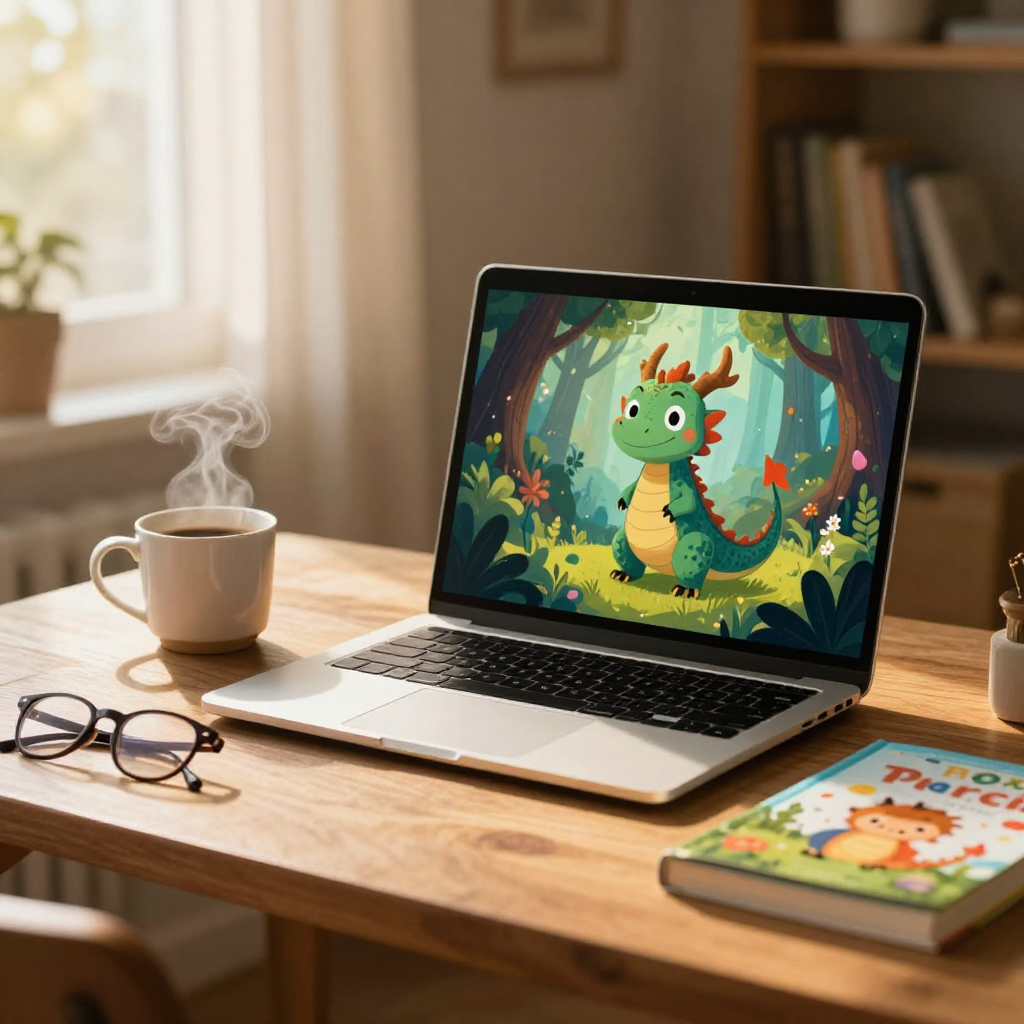
₹500 can you make selling AI children’s books in 1 day
I stumbled into this whole thing by accident.
Let me be completely honest about that.
About seven months ago I was sitting in my living room scrolling through YouTube at one in the morning because my brain refused to shut off.
I landed on this video of a woman, probably around my age, calmly explaining how she created a children’s book using nothing but AI tools.
She did not write the story herself. She did not draw the illustrations. She barely spent two days on the entire project.
And somehow that little book was pulling in steady monthly income on Amazon.
₹500 can you make selling AI children’s books in 1 day
I laughed at first. I actually remember thinking yeah sure lady that sounds too good to be real.
But something about her calm confidence made me curious enough to keep watching.
By the time the video ended I had three tabs open and was already testing one of the tools she mentioned.
That night changed the entire direction of my side income.
Why Most People Never Start an Online Business Even Though They Desperately Want To
Here is the uncomfortable truth.
The internet is overflowing with opportunities to build income outside of a traditional job.
Everybody knows this. Your cousin knows this. Your coworker who keeps talking about crypto knows this.
But most people never actually do anything about it.
₹500 can you makhttps://logicloops.net/personal-ai-agent-for-beginners-without-coding-in-15-min/e selling AI children’s books in 1 day
And honestly? I get it. I was stuck in that exact same loop for years.
The problem is not a lack of motivation.
The problem is that most online business models demand skills that take months or years to develop.
You want to start a blog? You need to learn SEO and content strategy and web design.
You want to sell courses? You need to be an expert in something and comfortable on camera.
You want to do freelance design? You better know Photoshop inside and out
Every path seems to require this massive upfront investment of time and skill building before you see a single dollar.
And for people who are already exhausted from their nine to five, that wall feels impossible to climb.
This is exactly why the AI children’s book model hit me so hard. Because it genuinely removes the two biggest barriers that stop creative projects from ever getting finished.
You do not need to be a writer.
You do not need to be an artist.
The AI handles both of those pieces. What you bring to the table is the idea, the taste, the curation, and the willingness to learn a simple process.
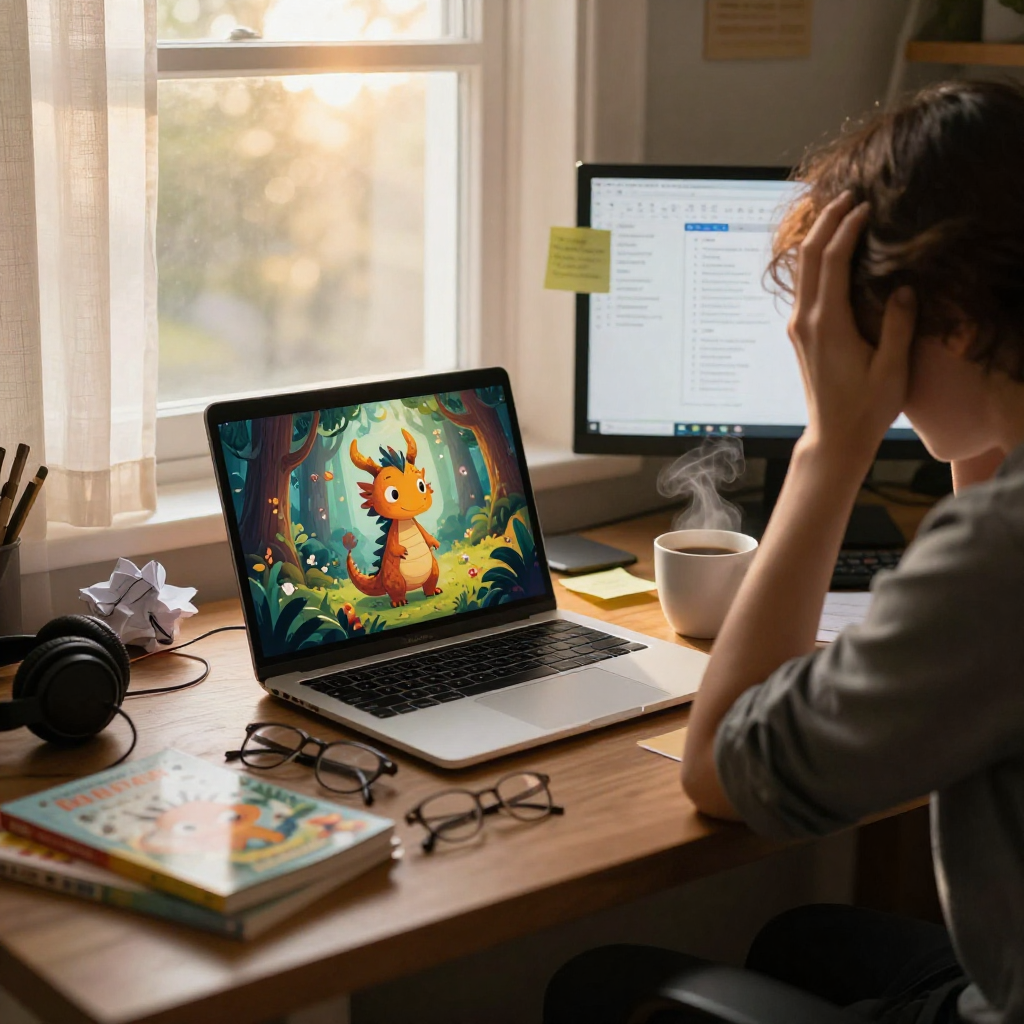
So What Exactly Does the Process Look Like From Start to Finish
Let me walk you through this the same way I wish someone had walked me through it when I started. No fluff. No hype. Just the real steps.
https://youtube.com/shorts/Y16Nfans7-M?si=w2Z4AcEU_lweaUpEFinding a Book Idea privacy policyThat Parents Actually Search For
The biggest mistake beginners make is creating a book about whatever random idea pops into their head.
I know because I did exactly that with my first attempt. I made a book about a snail who wanted to fly.
Cute concept. Nobody searched for it. It sold maybe two copies and one of those was my mom.What actually works is treating this like a small business decision.
You need to figure out what parents and gift buyers are already looking for on Amazon.
Tools like Publisher Rocket or even just the Amazon search bar itself can show you what people type when they are shopping for kids’ books.
Look for themes that have consistent demand but not a million competing titles.
Things like books about starting kindergarten, books about big emotions for toddlers, books about kids who are scared of the dark, books that teach kindness in simple ways.
These are evergreen topics that parents buy year round.Once you land on a concept that has real search volume behind it, you already have a massive advantage over most people who skip this step entirely.
Writing the Story Using AI Without It Sounding Like a Robot Wrote It
This part genuinely surprised me. When I first asked ChatGPT to write a children’s story I expected something stiff and weird.
And honestly the first draft was pretty rough. It read like an instruction manual pretending to be a bedtime story.
But here is what I learned through trial and error. The magic is in how you prompt the AI.
You cannot just type “write me a children’s book about a brave little fox” and expect gold. You need to give it context. Tell it the target age range.
Tell it you want rhythmic language that feels good when read aloud. Tell it you want emotional beats that a three year old can follow.
Ask it to keep sentences short and punchy.
Request a gentle lesson woven into the story without being preachy.
Then you take that draft and you read it out loud. Literally out loud, in your kitchen, like you are reading it to a child.
You will immediately hear what sounds natural and what sounds robotic. You edit those parts. You swap words.
You add your own little touches. Maybe you throw in a funny sound effect word that makes kids giggle.
Maybe you adjust the ending so it feels warmer.
By the time you are done, the story has your fingerprints all over it even though AI gave you the foundation.
This is the part most people do not understand. AI is the starting point, not the finish line.
Your taste and judgment are what turn a generic draft into something worth reading.
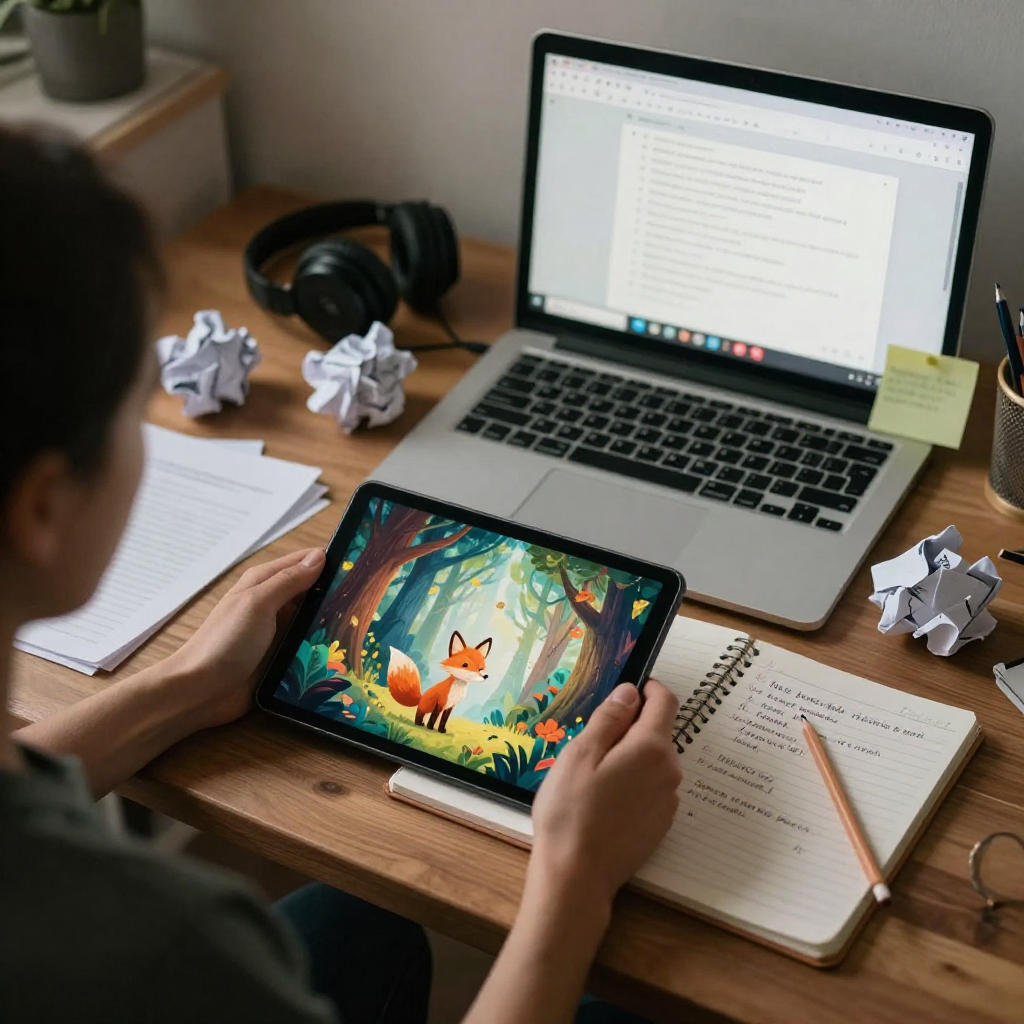
Creating Illustrations That Look Professionally Done
OK this is the part that feels like actual magic to me even after doing it dozens of times.
Tools like Midjourney and Leonardo AI can generate children’s book illustrations that genuinely look like a professional artist spent weeks on them.
The key is consistency. Every page of your book needs to look like the same artist created it. The characters need to look the same from page to page.
The color palette needs to feel cohesive.
I usually start by generating my main character in one specific art style.
I might prompt something like “a cute round faced little fox with big green eyes wearing a tiny red scarf, soft watercolor illustration style, warm autumn colors, children’s book art.
” Once I get an image I love, I use that as my style reference for every other illustration in the book.
Does it take some experimentation? Absolutely. My first few attempts produced some hilariously bad results.
I once generated a fox with three ears and what appeared to be a second tail growing out of its forehead.
You learn to refine your prompts, get specific about what you want, and regenerate until each image feels right.
The beauty of this process is that it costs almost nothing compared to hiring a real illustrator.
A professional children’s book illustrator can charge anywhere from two thousand to ten thousand dollars for a full book.
With AI tools you are spending maybe twenty to thirty dollars a month on subscriptions
Formatting and Publishing on Amazon KDP
Amazon’s Kindle Direct Publishing platform is free to use.
You upload your book, set your price, write your product description, and Amazon handles printing, shipping, and customer service.
They take a cut of each sale and you keep the rest.
I format my books using Canva or Book Bolt, both of which are straightforward enough that you do not need any design background.
You arrange your illustrations and text on each page, export the whole thing as a PDF, and upload it to KDP.
The entire publishing process from finished manuscript to live listing takes maybe two to three hours once you have done it a couple times.
My first book took me an embarrassingly long time because I kept second guessing every detail.
But by my fourth book I had the workflow down to a smooth routine.
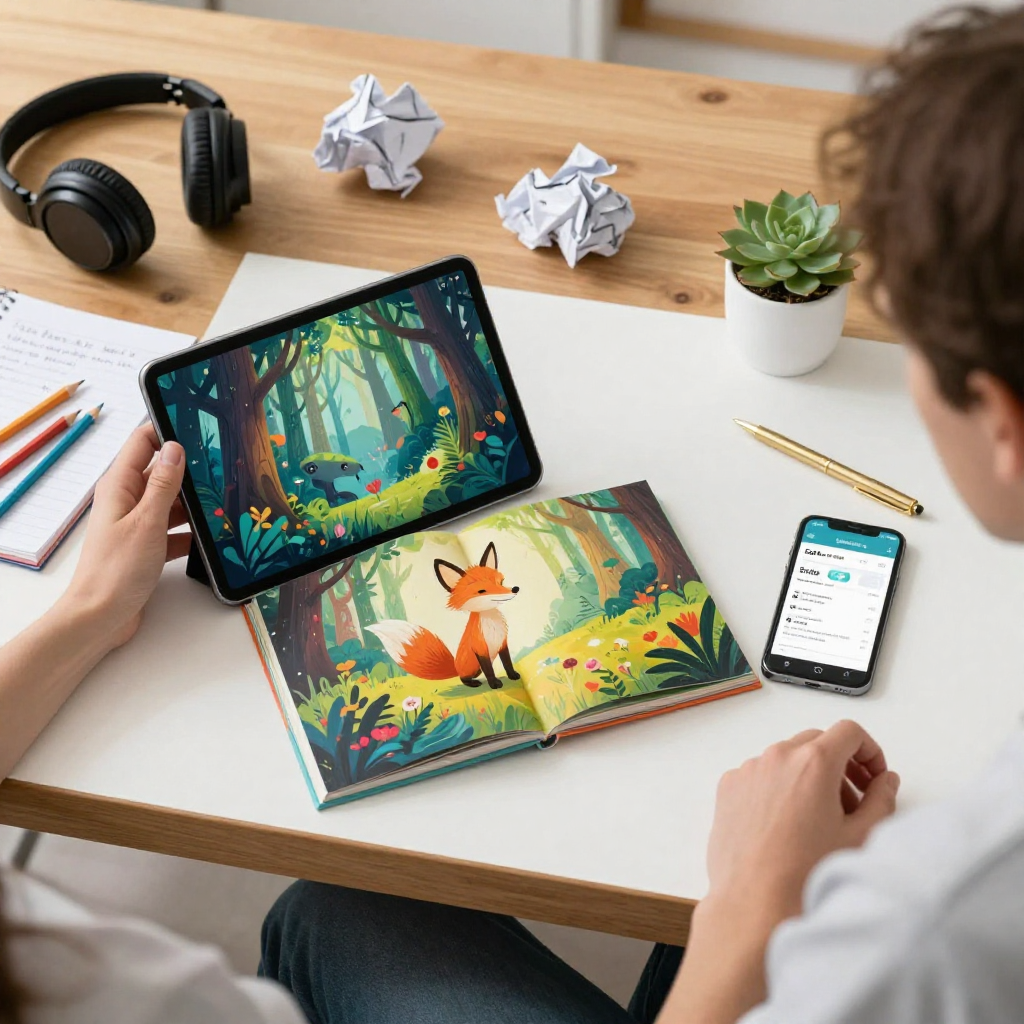
How Much Money Can You Realistically Make Selling AI Created Children’s Books
I want to be responsible here because the internet is full of people flashing screenshots and making this sound like a guaranteed goldmine.
It is not. Some books flop. Some books take months to gain traction. This is a real business and like any real business there is no guarantee.
But here is what I can tell you from my own experience and from the communities I am part of.
A single well researched children’s book in a solid niche can realistically earn anywhere from fifty to five hundred dollars per month in passive royalties.
That range is wide because it depends on your niche selection, your keywords, your cover quality, and how well you optimize your Amazon listing.
The real money comes from volume. People who treat this seriously and publish ten, twenty, even fifty books over the course of a year start seeing those individual streams add up into something meaningful.
I know creators in my circle who are earning between two and five thousand dollars monthly from their catalog of AI assisted children’s books. They did not get there overnight.
It took consistent effort over many months. But the income is largely passive now because those books sell without any daily work on their part.
Is It Even Legal to Sell Books Made With AI on Amazon
This question comes up constantly and I completely understand why. The legal landscape around AI generated content is still evolving.
As of right now Amazon does allow AI assisted books on their platform.
They updated their KDP guidelines to require that you disclose if AI was used in creating your content.
So you check a box during the publishing process and you are good.The important nuance here is the word “assisted.
” Amazon and the broader market are perfectly fine with creators who use AI as a tool in their process.
What raises red flags is people who mass produce hundreds of low quality books with zero human input or curation.
Amazon has cracked down on that kind of spam and rightfully so.
If you are using AI to help you write and illustrate but you are actively editing, curating, and putting genuine creative thought into the final product, you are operating well within the guidelines.
Think of AI as your assistant, not your replacement.
That mindset keeps you on the right side of both the rules and the quality expectations of your readers.
What About Copyright and Ownership of AI Generated Images
Another question I hear all the time. The current legal consensus in the United States is that purely AI generated images without significant human creative input may not be eligible for copyright protection.
However, when you substantially modify, arrange, select, and curate AI generated elements into a cohesive original work, your claim to ownership becomes much stronger.
In practical terms, this means you should always be adding your own creative direction and modifications rather than just hitting generate and publishing whatever comes out.
This is not just good legal practice. It is also what makes your books actually good enough to sell.
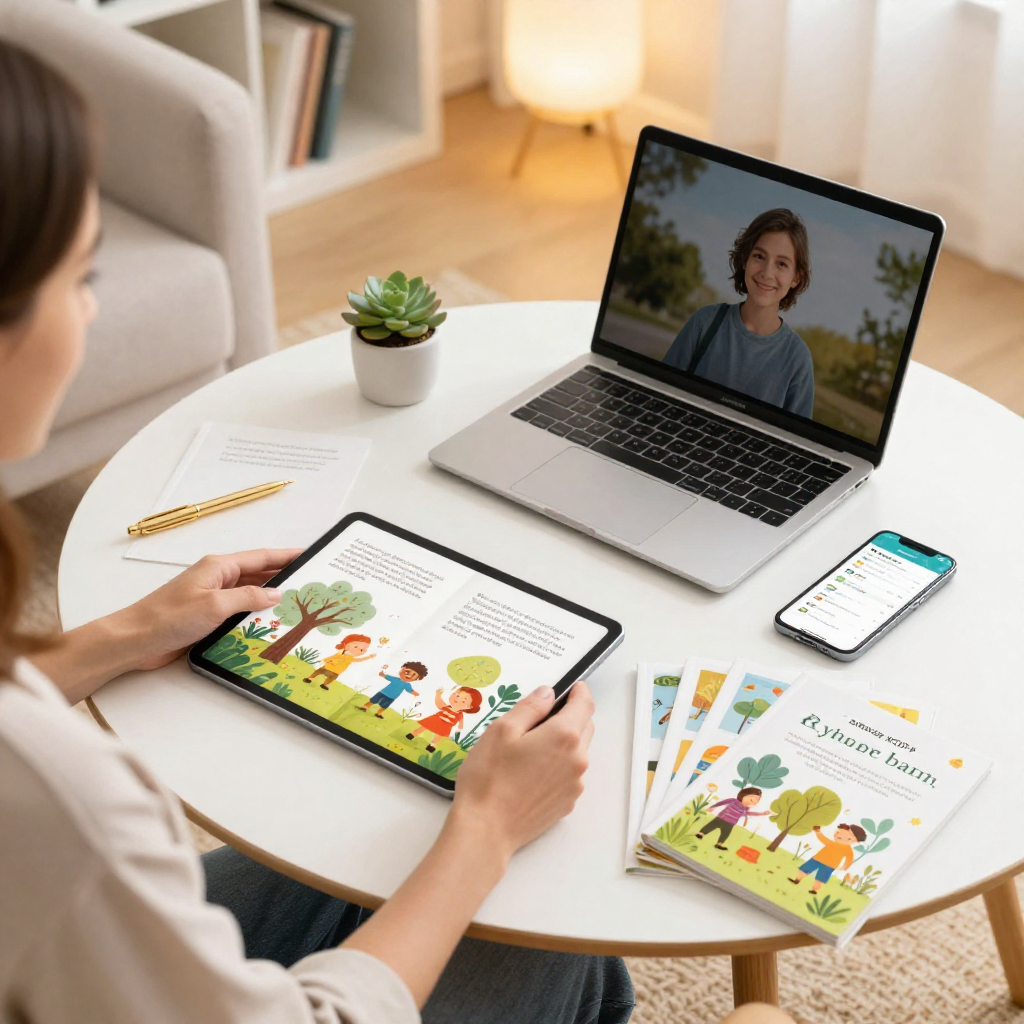
Where This All Lands
Seven months ago I was the person scrolling at one in the morning wondering if any of these online income ideas were real.
I had tried dropshipping and hated it. I had started a blog and abandoned it after three posts.
I had considered freelancing but could not figure out what skill to sell.
The AI children’s book path clicked for me in a way nothing else had. Not because it was easy. It was not, especially in the beginning when I was learning the tools and making ugly books that nobody wanted.
It clicked because for the first time the barriers that always stopped me were gone. I did not need to be a writer. I did not need to be an illustrator.
I just needed to be someone willing to learn a process, put in consistent effort, and keep improving with each book.
If you have been sitting on the sidelines watching other people build things online while you tell yourself you do not have the right skills, I want you to seriously consider this.
The tools exist right now. They are affordable. The platform is accessible to anyone.
And the market for quality children’s books is enormous and growing every single year.
You do not need to quit your job tomorrow. You do not need to invest thousands of dollars. Start with one book. Pick a niche that parents care about.
Use AI to build your draft and your illustrations. Edit everything with your own eyes and your own judgment. Publish it. See what happens.
Maybe it flops. That is fine. Make another one. Learn from what did not work.
Adjust.Or maybe, just maybe, you wake up one morning and check your phone and see that strangers on the internet bought something you created while you were sleeping.
That feeling? I promise you it never gets old.
Leave a Reply