
Published by Akshay G B. logic loop Category: Artificial Intelligence | Reading Time: 9 Minutes
Table of Contents
Multi-Agent Orchestration: The Future of AI Is Not 1 Brain

I remember the first time I genuinely tried to get an AI to handle a full real world task for me from start to finish.
Not just answer a question. Not just write a paragraph. I mean actually complete something meaningful.
Research a topic deeply, organize the findings, write a structured report, and format everything cleanly.
The result was frustrating. The AI kept losing context. It forgot earlier instructions.
It handled some parts brilliantly and fumbled others completely. I thought maybe I was just using it wrong.Turns out I was not using it wrong at all.
The problem was not me. The problem was architecture. One AI brain trying to do everything at once was never going to be the final answer.
That realization led me down a rabbit hole I have not climbed out of since. And what I found at the bottom of that rabbit hole is exactly what this post is about.
Multi-agent orchestration.
The Problem Nobody Warned You About With Single AI Agents
Let me ask you something honest.
Have you ever noticed that when you give an AI assistant a long complicated task with multiple steps, the quality of its output starts strong and then slowly deteriorates toward the end?Or that when you ask it to do several different things within one conversation,
it starts mixing things up, forgetting what you said earlier, or just producing something that feels rushed and incomplete?You are not imagining that. It is a real architectural limitation.
A single AI agent has what researchers call a context window. Think of it like working memory.
It can only hold so much information at one time. When a task requires more than what fits inside that window, things start falling out. Quality drops. Accuracy suffers.
Beyond the memory problem there is also a specialization problem.
The same agent that is excellent at writing creative content may not be equally excellent at running data analysis or executing code or browsing the web for current information.
Asking one agent to do all of those things at the same performance level is like hiring one employee and expecting them to be your accountant, your graphic designer, your researcher, and your customer service representative simultaneously.
Nobody performs at their best when they are stretched that thin.This is the core problem that multi-agent orchestration was built to solve. And once you understand the solution, the way you think about AI systems changes permanently.
So What Actually Is Multi-Agent Orchestration

Let me explain this in plain language because the technical definitions you find in research papers can make something genuinely elegant sound unnecessarily complicated.
Multi-agent orchestration is a system where multiple AI agents, each with their own specific skills and responsibilities, work together on a shared goal under the coordination of one master agent called the orchestrator.
The orchestrator is the smart coordinator. It understands the big picture.
It knows what needs to happen, which agent is best suited for each piece of work, and how all the individual outputs need to fit together at the end.
Each individual agent underneath the orchestrator is focused and specialized. One might be a research agent whose only job is to gather information from reliable sources.
Another might be a writing agent that takes raw information and turns it into polished readable content.
Another might be a code execution agent that writes and runs actual programming code to process data or automate a function.None of these agents are trying to do everything.
Each one is doing its specific thing exceptionally well.
And the orchestrator is making sure all of their work combines into something coherent, accurate, and useful.
Multi-Agent Orcheshttps://logicloops.net/why-your-ai-chatbot-keeps-forgetting-conversations/tration: The Future of AI Is Not 1 Brain
Here is a real world parallel that helped this click for me personally.
Think about how a well run marketing agency operates. There is a project manager who owns the client relationship and understands the campaign goals.
Under that project manager there is a copywriter, a designer, an SEO specialist, a paid ads manager, and an analyst.
Each person is a specialist. The project manager coordinates all of them.
At the end the client receives one unified campaign that reflects the expertise of every specialist involved.
Multi-agent orchestration works exactly like that. Just faster. And with artificial intelligence filling every role.
How Does Multi-Agent Orchestration https://youtube.com/shorts/B3kjN6ib2t0?si=_si0X-qOpY_2nOf9Actually Work Step by Step
This is the part I wish someone had explained to me clearly when I first started exploring this topic. So let me walk through it the way I would explain it to a friend sitting across the table from me.
Step one is task decomposition.
When you give a multi-agent system a complex goal, the orchestrator does not just throw that goal at one agent and hope for the best. It breaks the goal down into smaller subtasks.
Each subtask is clear, specific, and manageable. This decomposition is one of the most important things the orchestrator does because if the task breakdown is poor, everything downstream suffers.
Step two is agent assignment.
Once the orchestrator has a list of subtasks, it assigns each subtask to the agent best suited to handle it. If there is a subtask involving internet research, the research agent gets it.
If there is a subtask involving writing, the writing agent gets it. This matching of task to capability is what makes the whole system more efficient than any single agent could be.
Step three is parallel or sequential execution.
Some subtasks can happen at the same time because they do not depend on each other. A research agent can be gathering information while a planning agent is outlining the structure of the final output simultaneously.
Other subtasks must happen in sequence because one depends on the output of another. The orchestrator manages this timing intelligently.
Step four is output collection and review.
As each agent completes its work, the orchestrator collects the outputs. In more sophisticated systems there are also critic agents or reviewer agents whose job is specifically to evaluate the quality of what other agents produced before that output moves forward.
This quality control layer catches errors before they become embedded in the final result.
Step five is synthesis.
The orchestrator takes all the collected outputs and assembles them into one final coherent result. This is the part you actually see and experience as the end user.
What makes this process remarkable is how much complexity is happening invisibly.
From your perspective as the user, you stated a goal and received a high quality result.
Underneath that simple experience was an entire coordinated ecosystem of specialized agents doing sophisticated work.
What Are The Most Popular Frameworks For Building Multi-Agent Systems
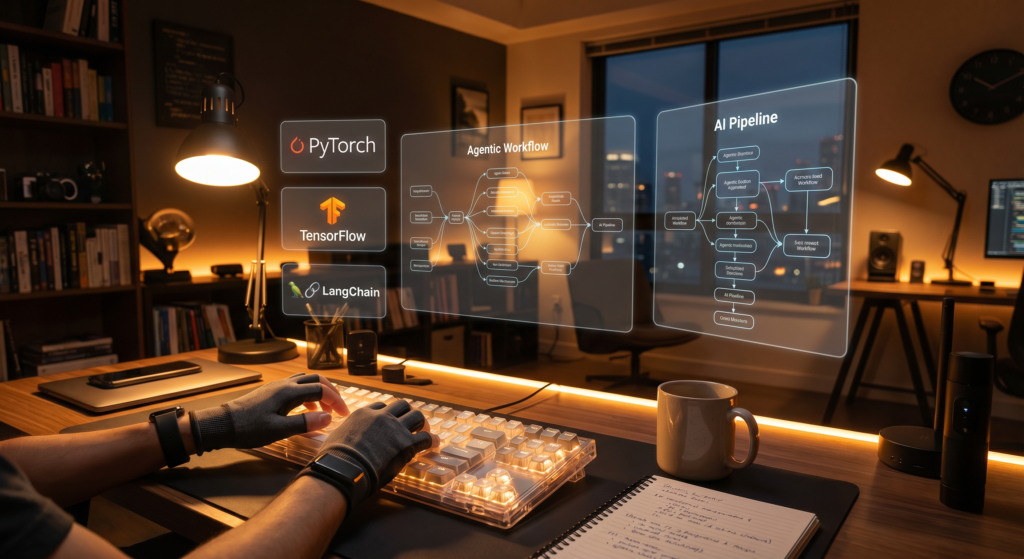
If you are someone who wants to go beyond just understanding this and actually start building with it, knowing which tools exist is essential.
What is CrewAI and why do beginners prefer it for multi-agent projects?
CrewAI is one of the most accessible frameworks available right now for building multi-agent systems.
It uses the concept of crews, which are teams of agents with defined roles, goals, and backstories. You define your agents, assign them tasks, set up the crew, and let it run.
The documentation is genuinely good and the learning curve is manageable even if you are relatively new to AI development.
What is LangGraph and how is it different from other orchestration frameworks?
LangGraph is built on top of LangChain and gives you much finer control over your agent workflows.
Instead of a simple crew structure, you build your workflow as a graph where nodes represent agents or functions and edges represent the flow of data between them.
This makes it extremely powerful for complex workflows but it does require a stronger technical foundation to use well.
What is AutoGen and who builds with it most often?
AutoGen comes from Microsoft Research and it is particularly interesting because it models agent interactions as conversations.
Agents literally talk to each other in structured dialogue to solve problems collaboratively.
It is popular with researchers and enterprise teams building sophisticated automation pipelines.
What is OpenAI Swarm and is it production ready?
OpenAI released Swarm as an experimental framework for exploring lightweight multi-agent coordination.
It is intentionally minimal and educational rather than production ready, but it is valuable for understanding the fundamental concepts of handoffs between agents and how orchestration logic can be structured cleanly.
Real Industries Using Multi-Agent Orchestration Right Now
This is not theoretical. This technology is being deployed in real businesses solving real problems today.
How is multi-agent orchestration being used in healthcare settings?
Healthcare organizations are using orchestrated agent systems where one agent processes patient intake information, another cross-references medical history, a third checks current clinical guidelines for the presenting symptoms, and a fourth prepares a summary for the reviewing physician.
The time savings are significant and the consistency of information gathering improves measurably.
How are financial services companies applying multi-agent AI systems?
In financial services, multi-agent systems are being used for real time risk assessment where different agents simultaneously analyze transaction patterns, account behavior history, geographic data, and known fraud signatures.
The orchestrator synthesizes all of that into a risk score faster than any single model could produce while actually being more accurate because each specialized agent performs better in its specific domain.
How is the content and media industry leveraging multi-agent orchestration?
Content production pipelines increasingly use multi-agent systems where a research agent gathers current information, an outline agent structures the content architecture, a writing agent produces the draft, an editing agent reviews for quality and consistency, and an SEO agent checks the content against target keyword strategies.
What might take a content team several days can move significantly faster without sacrificing quality.
The Honest Challenges That Come With This Technology
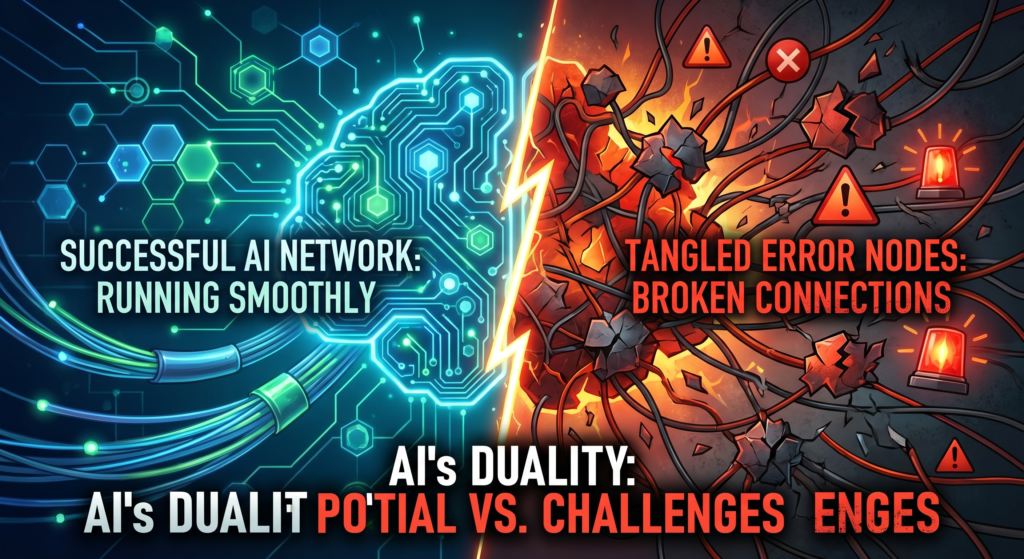
I want to be straightforward with you here because I think honest assessments of technology are more valuable than pure hype.
Multi-agent orchestration is genuinely powerful.
It is also genuinely complex and it comes with real challenges that practitioners deal with every day.
What is error propagation in multi-agent systems and why does it matter?
When one agent early in the workflow produces an incorrect output, every agent that receives that output as input is now working from a flawed foundation. The error does not just stay in one place.
It travels downstream and can multiply in ways that are difficult to detect until the final output is clearly wrong. Building in quality checkpoints and critic agents helps but does not eliminate this risk entirely.
Why is latency a persistent problem in multi-agent AI orchestration?
Running multiple agents, especially when they are making multiple API calls or executing complex reasoning chains, takes time and costs computational resources.
Designing systems that are thorough enough to be useful but fast enough to be practical requires constant tradeoffs and careful architectural decisions.
What security risks exist in multi-agent systems that give agents real world tool access?
When agents have permission to browse the internet, execute code, send emails, query databases, or call external services, the potential attack surface of the system grows significantly.
Prompt injection, where malicious content encountered in the environment tricks an agent into taking unintended actions, is a real and active security concern that anyone building these systems needs to take seriously.
How You Can Start Exploring Multi-Agent Orchestration Today
You do not need to be a machine learning researcher or a software engineer with ten years of experience to start understanding and experimenting with this technology.
Start by genuinely understanding what a single agent can and cannot do. Spend time with a tool like Claude or GPT-4 and intentionally give it complex multi-step tasks.
Pay attention to where it starts to struggle. This builds your intuition for why multi-agent architecture exists.
Then look at the CrewAI documentation and follow their quickstart examples.
They are written clearly and you can have a basic two-agent crew running in an afternoon even with modest Python experience.
Read the research that is publicly available. The ReAct paper, which introduced the idea of agents that reason and act in cycles, is foundational.
Lilian Weng’s writing on agents at OpenAI is excellent and accessible. These readings give you the conceptual vocabulary to understand what you are building and why it works.
Most importantly, build something that solves a problem you actually have. Theory without application stays shallow.
The moment you try to solve a real problem with a multi-agent system, your learning accelerates in ways that no tutorial can replicate.
Where This Is All Going and Why It Matters for You

The direction of travel in AI development is unmistakably toward greater autonomy, greater specialization, and greater coordination between intelligent systems.
Multi-agent orchestration sits at the intersection of all three of those trends. It is not a detour or a side experiment.
It is increasingly looking like the fundamental architecture of how capable AI systems will be built going forward.
What does that mean for you personally?
If you are someone who uses AI tools in your work, understanding this architecture helps you use those tools more intelligently and anticipate what they will be capable of very soon.
If you are someone building products or services, understanding orchestration opens up possibilities for what you can automate and how you can design systems that are genuinely robust.
If you are simply curious about where technology is heading, this is one of the most important threads to follow.The single AI assistant answering your questions is only the beginning of the story.
The teams of coordinated AI specialists working together toward your goals in the background, that is where the story gets genuinely interesting.
My Final Thoughts On Multi-Agent Orchestration
We started this conversation with a simple frustration. One AI brain trying to do too many things and doing none of them as well as I needed.
The answer to that frustration turned out to be the same answer humans figured out long ago when facing complex work that exceeded any individual’s capacity.
You build a team. You assign clear roles. You coordinate effectively.
You review the work.
You deliver the result.
Multi-agent orchestration is artificial intelligence finally learning that lesson at scale.
And watching it happen in real time, in real systems, solving real problems, is one of the most genuinely exciting things I have witnessed in years of following this technology.
I hope this post gave you a clear, honest, and useful starting point for understanding it.
If you have questions or you are building something in this space, drop a comment below.
I read every single one and I respond to as many as I can.
Until next time.
– [Akshay G B]
Leave a Reply