Table of Contents
The Hidden Cellular Magic That Could Revolutionize in 10 days
Have You Ever Wondered What Is Actually Happeninghttps://logicloops.net/the-rise-of-the-agentic-ghost-worker-your-invisible-ai-employee-that-works-24-7/ Inside Your Cells Right Now?
At this very second, trillions of tiny molecular machines inside your body are building something extraordinary from scratch. Not repairing old materials.
Not recycling broken parts. Building entirely new protein structures that did not exist moments ago.
This process, known as de novo protein synthesis, is one of the most quietly powerful biological events happening inside every single human being on this planet. Yet most people have never heard of it. Most health conversations skip right past it.
Most fitness influencers talk about protein intake without ever explaining what your body actually does with that protein at the molecular level.
And here is where things get genuinely interesting.Artificial intelligence researchers, molecular biologists, and pharmaceutical companies are now racing to understand, map, and even manipulate de novo protein synthesis because they believe it holds the answer to treating cancer, reversing neurological diseases, slowing aging, and dramatically improving human performance.The Hidden Cellular Magic That Could Revolutionize in 10 days
If you have ever wondered why some people build muscle faster, why certain diseases develop, why your brain works the way it does, or how future medicines might be designed, this article is going to change how you think about your own body forever.
The Problem Nobhttps://youtube.com/shorts/Khbal0XakdQ?si=Ey6bnTBZbE3LSI_rody Is Talking About
Here is the uncomfortable truth that the health and wellness industry conveniently ignores.
Most people treat their body like a machine that just needs the right fuel. Eat protein. Exercise. Sleep. Repeat. But this surface-level understanding is keeping millions of people stuck in cycles of poor recovery, chronic fatigue, unexplained health decline, and frustrating fitness plateaus.
The deeper reality is that your body does not just use protein. It builds protein from scratch using a breathtakingly complex genetic instruction system, and when that system malfunctions even slightly, the consequences range from uncomfortable to catastrophic.
Conditions like Alzheimer’s disease, Parkinson’s disease, certain cancers, muscular dystrophy, and even depression have been directly linked to disruptions in de novo protein synthesis pathways.
The Hidden Cellular Magic That Could Revolutionize in 10 days
The pharmaceutical industry is investing billions of dollars trying to understand exactly where these pathways break down.
Meanwhile, the average person consuming a high-protein diet has no idea whether their cells are actually synthesizing new proteins efficiently or whether the molecular machinery responsible for this process is quietly degrading.
This knowledge gap is enormous. And filling it could genuinely change your approach to health, nutrition, training, and disease prevention.
What Do Novo Protein Synthesis Actually Means
Let us start with the basics and build from there, because understanding this concept at a fundamental level makes everything else click into place.
The term de novo comes from Latin, meaning “from the beginning” or “anew.” When biologists use the phrase de novo protein synthesis, they are specifically describing the process by which your body creates entirely new proteins using genetic information encoded in your DNA, rather than modifying or reusing existing protein structures.
This is distinct from protein recycling, which involves breaking down damaged proteins and using the recovered amino acids for other purposes. De novo synthesis is genuinely fresh construction.
The Three-Stage Construction Process
Stage One: Transcription
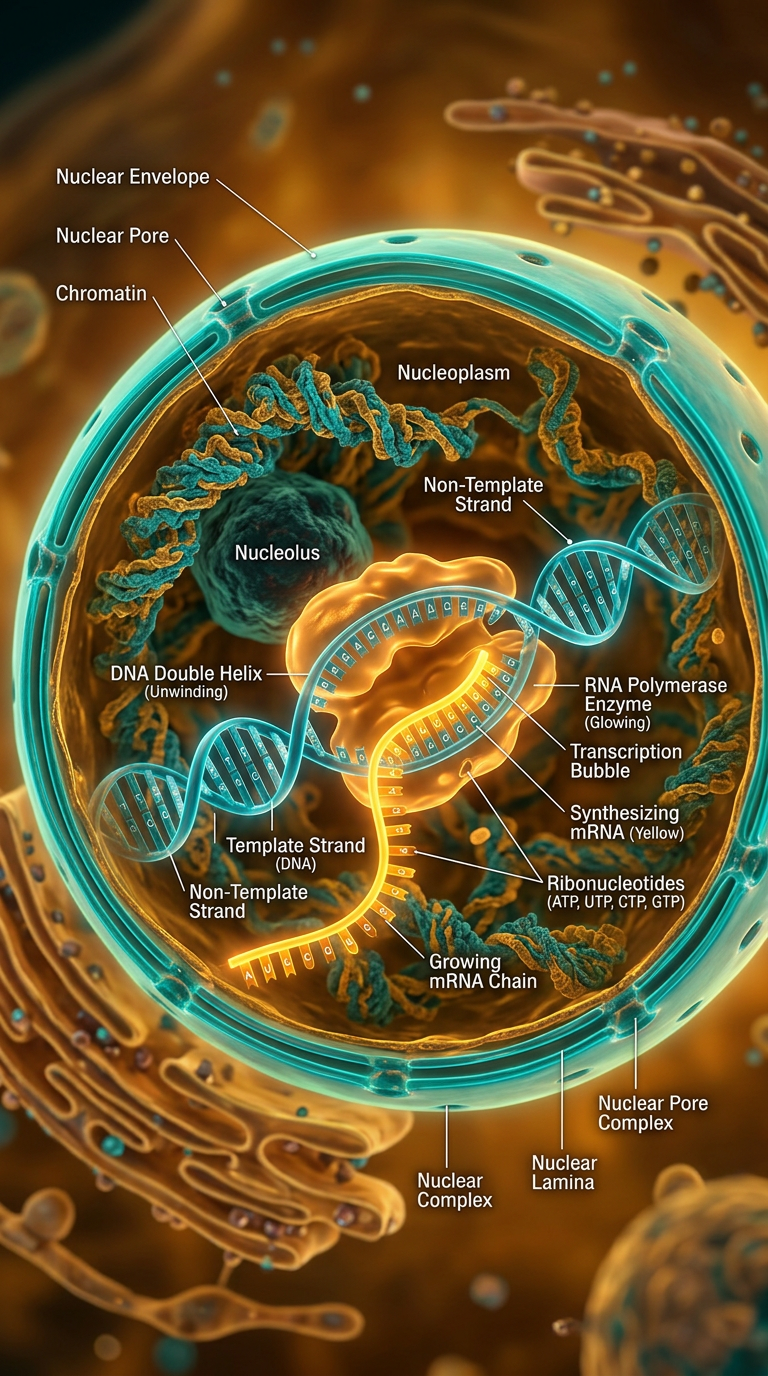
Everything begins in the nucleus of your cell, where your DNA is stored. A specific segment of DNA containing the instructions for building a particular protein is “read” by an enzyme called RNA polymerase.
This enzyme creates a complementary copy of the genetic instructions in the form of messenger RNA, commonly called mRNA.
Think of this as photocopying a recipe from a sealed cookbook so you can take it to the kitchen without damaging the original.
Stage Two: RNA Processing
Before the mRNA can leave the nucleus, it undergoes significant editing. Non-coding sections called introns are removed. Protective caps and tails are added to prevent degradation.
The edited mRNA molecule is then exported from the nucleus into the cytoplasm of the cell.
Stage Three: Translation
This is where the actual protein building happens.
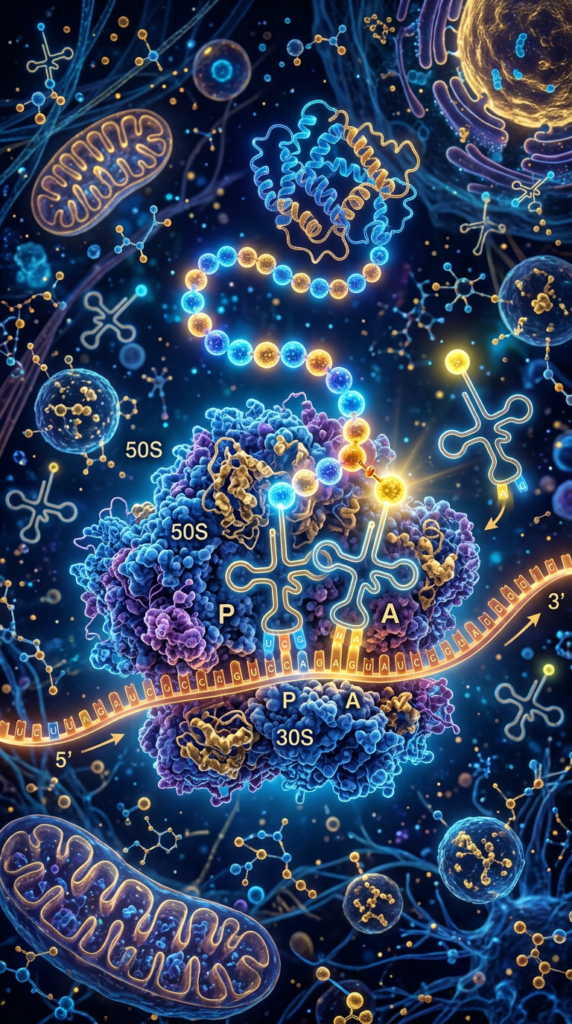
Ribosomes, which are remarkable molecular machines made of both protein and ribosomal RNA, bind to the mRNA strand. They read the genetic code three letters at a time, with each three-letter sequence called a codon corresponding to a specific amino acid.
Transfer RNA molecules carry the correct amino acids to the ribosome in the exact order specified by the mRNA.
As each amino acid is added, a peptide bond forms, and the growing protein chain begins to take shape.Once the full amino acid sequence is assembled, the protein folds into its specific three-dimensional structure.
This folding is not random. It is guided by chaperone proteins and is absolutely critical because a protein’s function depends entirely on its shape.
Why De Novo Protein Synthesis Matters More Than Your Protein Shake
Here is where this topic becomes deeply personal and practically relevant.
Muscle Growth and Athletic Performance
When you perform resistance training, you create microscopic damage in your muscle fibers. Your body responds by activating signaling pathways, most notably the mTOR pathway (mechanistic target of rapamycin), which acts like a master switch for de novo protein synthesis in muscle tissue.
This pathway essentially tells your ribosomes to ramp up production of structural proteins like actin and myosin, the proteins responsible for muscle contraction and growth.
The rate of de novo protein synthesis in muscle tissue directly determines how quickly and effectively you recover from training and build new muscle. Factors that influence this rate include:
- Leucine availability from dietary protein
- Insulin sensitivity and blood glucose management
- Sleep quality and growth hormone release
- Mechanical tension applied to the muscle during exercise
- Age-related decline in ribosomal efficiency
This is why two people following identical training programs and eating the same amount of protein can experience dramatically different results. Their cellular machinery for de novo protein synthesis may be operating at completely different efficiencies.
Brain Function and Neurological Health
Perhaps the most fascinating application of de novo protein synthesis research involves the brain.
Neuroscientists have discovered that long-term memory formation requires de novo protein synthesis in neurons.
When you learn something new or form a lasting memory, your neurons physically synthesize new proteins that strengthen synaptic connections.
Research published in prestigious journals including Nature Neuroscience has demonstrated that blocking de novo protein synthesis during or immediately after a learning event prevents long-term memory formation.
The short-term memory exists, but the permanent neural architecture never gets built.This finding has profound implications for understanding memory disorders.
Conditions like Alzheimer’s disease involve significant disruptions to protein synthesis pathways in neurons, contributing to the progressive loss of memory and cognitive function
Immune System Defense
Your immune system depends entirely on de novo protein synthesis to mount effective responses to infection.
When your body encounters a pathogen, immune cells called B lymphocytes synthesize enormous quantities of antibody proteins from scratch, often producing millions of antibody molecules within hours of detecting an invader.
The remarkable effectiveness of this system, and the catastrophic consequences when it fails, underlines just how central de novo protein synthesis is to basic human survival.
The AI Revolution in Protein Synthesis Research
This is the part of the conversation that is generating genuine excitement in research communities worldwide.
Artificial intelligence, particularly machine learning models trained on vast databases of protein structure and genetic sequences, is fundamentally transforming our understanding of de novo protein synthesis.
And the implications are staggering.
AlphaFold and the Protein Folding Breakthrough
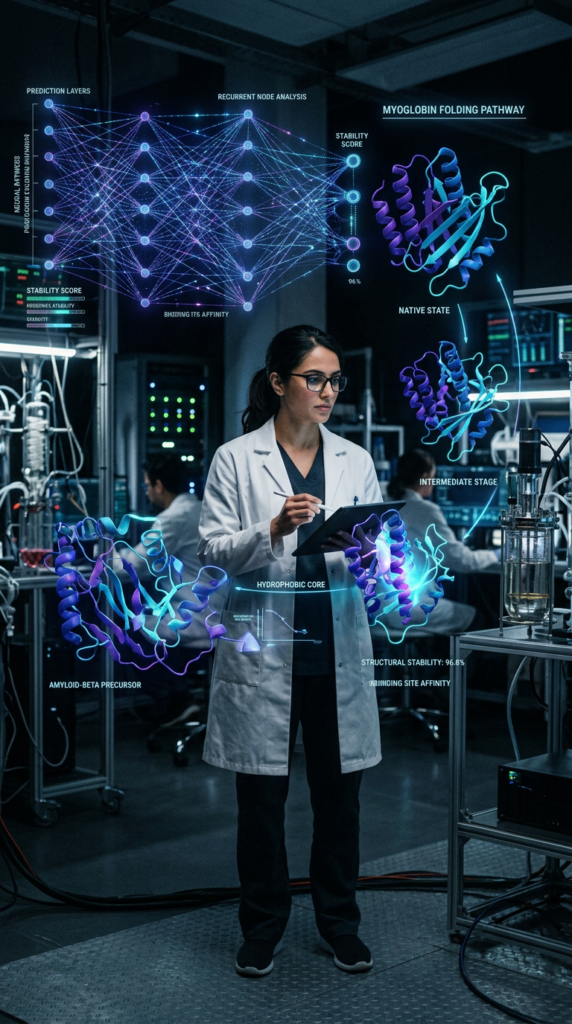
In 2025, DeepMind’s AlphaFold artificial intelligence system solved a challenge that had stumped biologists for fifty years: predicting how a protein will fold based solely on its amino acid sequence.
This was described by Nobel Prize winners as one of the most significant scientific achievements in decades.
Why does this matter for de novo protein synthesis research? Because understanding precisely how newly synthesized proteins fold allows scientists to predict whether a given protein will function correctly or whether it will misfold and potentially cause disease.
Misfolded proteins are the primary culprits in conditions like Alzheimer’s, Parkinson’s, and prion diseases
AI-Designed Proteins That Have Never Existed in Nature
Here is where things become genuinely mind-bending.
Researchers at the University of Washington’s Institute for Protein Design, led by Dr. David Baker, are using artificial intelligence to design entirely new proteins with specific functions, proteins that have never existed in nature and would never arise through evolution.
These computationally designed proteins are then synthesized de novo in laboratory settings using the same cellular machinery your body uses every day.
Some of these novel proteins are already showing promise as:
- Next-generation vaccines with unprecedented effectiveness
- Nano-scale drug delivery systems that can target specific cells
- Biosensors capable of detecting diseases at the molecular level
- Enzymes that can break down plastic waste and environmental pollutants
The convergence of AI-driven protein design and de novo protein synthesis is arguably the most exciting frontier in all of modern biology.
What Disrupts De Novo Protein Synthesis and How to Protect Yours
Given how fundamental this process is to virtually every aspect of your health, understanding what compromises it should be a priority for everyone.
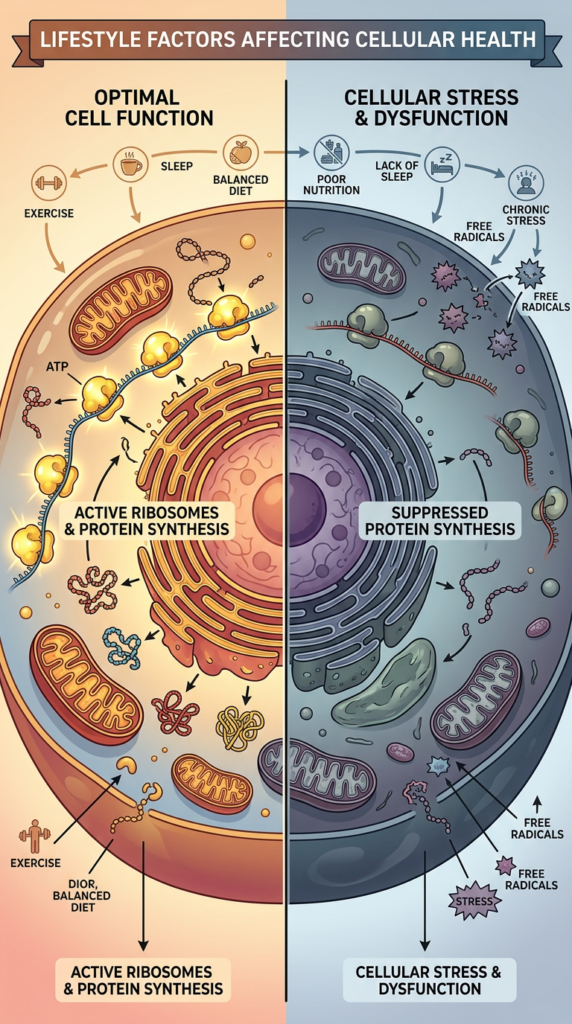
Chronic Stress and Cortisol
Prolonged elevation of the stress hormone cortisol actively suppresses protein synthesis in muscle tissue. This is why chronic psychological stress is associated with muscle wasting, poor recovery, and accelerated physical aging. The mechanism involves cortisol inhibiting the mTOR signaling pathway and reducing ribosomal activity in muscle cells.
Nutritional Deficiencies That Most People Miss
While adequate protein intake is obviously important, several micronutrients play critical supporting roles in de novo protein synthesis that are frequently overlooked:
Zinc is essential for RNA polymerase function. Without sufficient zinc, your cells cannot efficiently transcribe genetic information. Zinc deficiency is surprisingly common, particularly among athletes and elderly individuals.
Magnesium is required by ribosomes to function correctly. It literally holds ribosomal subunits together during translation. Given that studies suggest over half of the population in developed countries consumes insufficient magnesium, this represents a potentially widespread brake on protein synthesis efficiency.
Vitamin D has been shown to regulate gene expression and influence protein synthesis in multiple tissue types, including muscle and immune tissue. The widespread prevalence of vitamin D deficiency in populations living at northern latitudes may partially explain some of the health disparities observed in these regions.
Sleep Deprivation
During deep sleep, your body releases the majority of its daily growth hormone, which is one of the most potent stimulators of de novo protein synthesis.
Studies consistently show that even moderate sleep deprivation significantly reduces muscle protein synthesis rates and impairs the cellular machinery responsible for this process.
The idea that you can shortchange sleep and compensate with nutrition alone is not supported by the biology.
Excessive Alcohol Consumption
Alcohol directly inhibits protein synthesis in the liver and muscle tissue. It disrupts mRNA stability, impairs ribosomal function, and interferes with the amino acid signaling pathways that trigger muscle protein synthesis. A single episode of excessive drinking can suppress muscle protein synthesis for up to twenty-four hours following consumption.
Practical Steps to Optimize Your De Novo Protein Synthesis
Understanding this science is only valuable if it translates into meaningful action. Here are evidence-based strategies to support optimal protein synthesis at the cellular level.
Prioritize leucine-rich protein sources at each meal. Leucine is the specific amino acid that activates the mTOR pathway most powerfully. Foods naturally high in leucine include eggs, chicken breast, beef, salmon, soybeans, and dairy products.
Research suggests that approximately 2.5 to 3 grams of leucine per meal is the threshold needed to maximally stimulate muscle protein synthesis in healthy adults.Time protein intake around resistance training thoughtfully.
While the “anabolic window” has been somewhat overstated in popular fitness culture, consuming protein within two to three hours of training does appear to support optimal de novo protein synthesis rates during the period when muscle protein synthesis is most elevated.
Protect your sleep aggressively. Treat seven to nine hours of quality sleep as non-negotiable if optimizing protein synthesis and recovery is important to you. The growth hormone released during deep sleep stages is not replaceable through any supplement or dietary strategy.
Manage chronic stress actively. Practices like meditation, time in nature, adequate social connection, and structured stress-reduction techniques have measurable effects on cortisol levels and, therefore, on protein synthesis rates.
Address micronutrient gaps by getting comprehensive blood panels that include zinc, magnesium, and vitamin D levels rather than guessing. Targeted supplementation based on confirmed deficiencies is far more effective than taking everything available.
The Future of De Novo Protein Synthesis Research
The next decade is likely to bring remarkable developments in this field.
Researchers are actively investigating mRNA therapeutics that could theoretically instruct your cells to synthesize specific proteins on demand.
The COVID-19 vaccines demonstrated for the first time that this technology works safely in humans at massive scale.
Future applications may include instructing cells to produce proteins that fight cancer, repair damaged tissue, or compensate for genetic deficiencies.
CRISPR-based gene editing combined with our growing understanding of protein synthesis regulation may eventually allow scientists to correct mutations that cause inherited protein synthesis disorders, potentially curing diseases that are currently considered untreatable.
Personalized nutrition and medicine based on individual variations in protein synthesis efficiency, which can be identified through genetic testing, may soon allow truly customized health interventions rather than the one-size-fits-all recommendations that currently dominate public health messaging.
Conclusion: Your Cells Are Building the Future, One Protein at a Time
De novo protein synthesis is not a niche scientific concept reserved for molecular biology textbooks.
It is the foundational process that determines whether you recover from your workout, whether your immune system defeats an infection, whether your brain successfully stores a memory, and whether or not certain diseases take hold in your body.
The fact that artificial intelligence is now unlocking mysteries about this process that stumped researchers for generations means we are standing at an extraordinary moment in human health history.
The proteins being designed by AI systems today could become the medicines, vaccines, and biological tools that define healthcare for the next century.
But you do not need to wait for that future to start acting on this knowledge today.
Understanding that your body is a living protein synthesis factory, one that responds to what you eat, how you sleep, how you manage stress, and how you exercise, gives you a new and more powerful lens through which to view every health decision you make
Every well-timed protein-rich meal, every hour of protected sleep, every managed stress response is not just making you feel better in the short term. It is directly supporting the molecular machinery that is quietly, tirelessly, and remarkably building you from the inside out.
The science of de novo protein synthesis is ultimately the science of becoming. And you have more influence over that process than you might ever have imagined.
About This Article: This content was researched and written using current peer-reviewed literature from journals including Nature, Cell, Nature Neuroscience, and The Journal of Physiology. All health-related recommendations should be discussed with a qualified healthcare professional before implementation.
Leave a Reply