When Your Code Learns to Heal Itself in 1 minutes
Category: Artificial Intelligence | Software Development | Future Tech
Reading Time: ~8 minutes
Author: A seasoned developer and AI enthusiast who has spent over a decade watching code break at 2 AM
Table of Contents
The Night My Entire Codebase Broke Itself Into Pieces
It was a Tuesday. Not a dramatic, story-worthy Tuesday. Just an ordinary, slightly cold Tuesday evening when I pushed what I was completely convinced was a clean, tested, production-ready update to our main repository.
Within forty minutes, our monitoring dashboard lit up like a Christmas tree. Errors were cascading. Users were complaining. My team lead was calling.
I have been in software development long enough to know that feeling in your chest when you realize something deeply fundamental has gone wrong.
And in that moment, all I could think was a very simple, almost desperate question.What if the code could just fix itself?
That thought stayed with me for months. And honestly, that question is no longer just a developer’s sleep-deprived fantasy.
It is becoming a very real, very discussed, and very rapidly advancing area of artificial intelligence called self-correcting codebases.
When Youhttps://logicloops.net/autonomous-procurement-bots-revolution-in-10-day/r Code Learns to Heal Itself in 1 minutes
If you have been searching for information about how AI can automatically fix bugs in software, how self-healing code systems work, or whether autonomous code correction is actually possible in 2026 and beyond, then you are in exactly the right place.
Let us walk through all of it together.
What Exactly Is a Self-Correcting Codebase?
Before we dive into the technical side of things, let us make sure we are all speaking the same language here.
A self-correcting codebase refers to a software system that uses artificial intelligence and machine learning algorithms to automatically detect errors, logical inconsistencies, security vulnerabilities, and performance bottlenecks within its own code, and then applies corrections or suggests highly accurate fixes without requiring significant human intervention.
Think of it less like a spell checker and more like having an incredibly experienced senior developer who never sleeps, never gets tired, reads every single line of your code constantly, and immediately raises a flag or even writes a fix the moment something looks wrong.
This is not science fiction. Tools and frameworks that support variations of this concept already exist today, and the technology is growing at a pace that is genuinely exciting.
Why Traditional Dehttps://youtube.com/shorts/kyF0SOyOF18?si=PMym1OQtPQIRoVDXbugging Methods Are No Longer Enough
Here is the honest truth that most software teams quietly acknowledge but rarely say out loud.
Modern codebases have grown enormously complex. We are talking about applications with millions of lines of code, hundreds of third-party dependencies, microservices architectures, cloud integrations, and teams of developers spread across multiple time zones contributing to the same repository simultaneously.
In this environment, the traditional model of a developer sitting down, reading through error logs, reproducing a bug locally, identifying the root cause, writing a fix, testing it, and deploying it is not broken.
It still works. But it is painfully slow, expensive, and deeply dependent on individual human expertise and availability.
Consider these realities that development teams face today.
The average cost of a software bug increases exponentially the later it is discovered in the development lifecycle.
A bug caught during design costs almost nothing to fix.
A bug discovered in production can cost thousands or even hundreds of thousands of dollars depending on the system involved.
Developer burnout is a genuine and growing crisis in the tech industry, and a significant portion of that burnout comes directly from the repetitive, grinding work of debugging and maintenance rather than from creative problem solving.
Security vulnerabilities are introduced into codebases faster than human teams can realistically audit them, leaving systems exposed for windows of time that malicious actors are very happy to exploit.
This is the real problem that self-correcting codebases are being built to solve. Not just convenience. Actual business survival and system integrity.
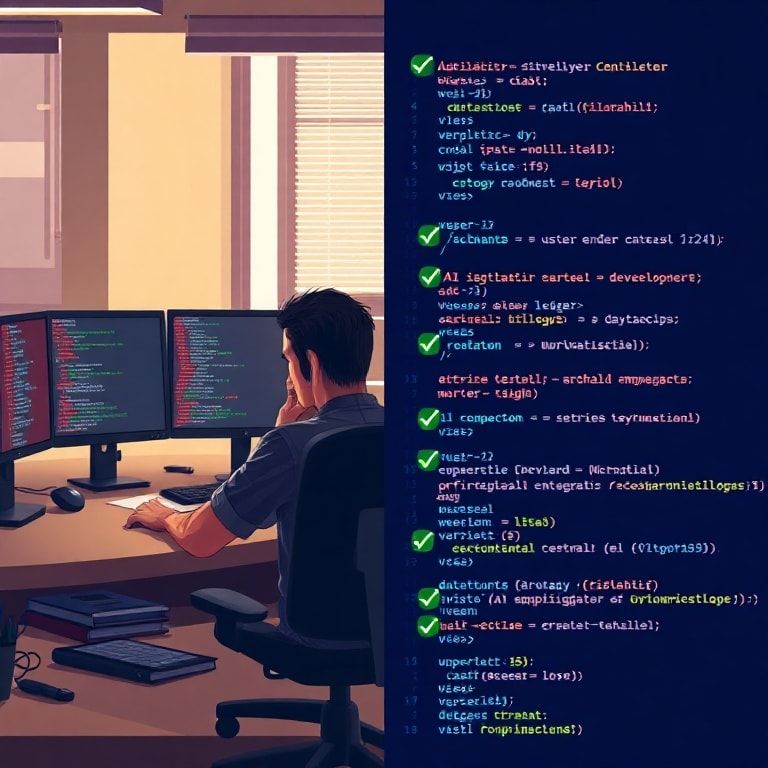
How Self-Correcting AI Systems Actually Work Inside Your Code
This is where things get genuinely fascinating for anyone who loves understanding how technology works beneath the surface.
Modern self-correcting code systems typically operate through a combination of several AI-driven mechanisms working together.
Static Analysis Powered by Large Language Models
Traditional static analysis tools scan code for known patterns of errors without actually running the code. AI-enhanced static analysis goes significantly further.
Large language models trained on billions of lines of open-source code can understand the semantic intent behind your code, not just its syntax.
This means they can identify when code is technically valid but logically wrong, which is one of the hardest categories of bugs for traditional tools to catch.
Runtime Monitoring with Anomaly Detection
Self-correcting systems do not only look at code before it runs. They monitor system behavior during execution and use machine learning models to distinguish between normal operational patterns and anomalous behavior that signals an emerging problem.
When an anomaly is detected, the system can trigger automated responses ranging from rolling back a recent deployment to isolating a failing microservice to generating a patch suggestion instantly.
Reinforcement Learning Based Code Optimization
Some more advanced research-stage systems use reinforcement learning, where an AI agent is rewarded for producing code corrections that pass test suites and improve performance metrics.
Over time, these systems become better at understanding what good code looks like in the specific context of your particular application and team conventions.
Automated Test Generation and Validation
One of the most underappreciated components of self-correcting codebases is the ability of AI to generate new test cases automatically.
When a bug is found and a fix is proposed, the system can simultaneously generate tests that would have caught that bug, adding them to your test suite so the same category of error cannot silently return later.
Real Tools That Are Already Moving in This Direction
You do not have to wait for some distant future to start seeing this technology in action. Several tools available right now incorporate meaningful self-correcting or self-healing capabilities.
GitHub Copilot with Copilot Autofix has moved beyond simple code suggestion into identifying security vulnerabilities through code scanning and automatically proposing specific fixes directly within the pull request workflow. This is a significant step toward genuinely automated correction.
Cursor AI has built an entire development environment around the idea of an AI that understands your codebase holistically and can make multi-file corrections based on a single natural language instruction, understanding the ripple effects of changes in a way that isolated code completion tools cannot.
Sweep AI operates as a GitHub application that takes bug reports written in plain English and autonomously writes the code changes needed to address them, opens a pull request, and even iterates on its own solution based on feedback.
Tabnine Enterprise offers codebase-aware AI assistance that learns the specific patterns, conventions, and architecture of your particular organization’s code rather than applying generic suggestions.
Aider is an open-source command-line tool that allows developers to pair program with large language models in a way that directly edits source files and automatically commits changes, representing a genuinely autonomous correction workflow.
The Most Important Question: Can We Actually Trust Self-Correcting Code?
This is the question that every experienced developer, every engineering lead, and every CTO should be asking before they integrate any self-correcting system into a production workflow.
And it deserves a completely honest answer.The short answer is that it depends heavily on implementation, oversight, and the maturity of the specific system involved.
Self-correcting AI systems are genuinely impressive, but they are not infallible. They can misunderstand the intent behind code, particularly in highly specialized domains or legacy systems with unusual architectural patterns.
They can introduce fixes that solve one problem while creating a subtler new one. They can be confidently wrong, which is arguably more dangerous than being obviously wrong.
This is why the most responsible implementations of self-correcting codebase technology today operate on a human-in-the-loop model. The AI identifies problems and proposes corrections. Human developers review those proposals before they are merged into production.
The AI dramatically reduces the cognitive workload and the time required to identify and draft solutions, but human judgment remains the final gate.
As these systems mature and accumulate track records of reliability within specific environments, the level of autonomy can be carefully and incrementally increased.
We are building trust with these systems the same way we build trust with a new team member. Gradually, through demonstrated performance, with appropriate supervision along the way.
What Self-Correcting Codebases Mean for the Future of Development Teams
Let me be direct about this because there is a lot of anxiety in the development community around this exact question, and I think that anxiety deserves a thoughtful response rather than dismissal or false reassurance.
Self-correcting codebase technology will absolutely change what software developers spend their time doing.
It will reduce the proportion of development time consumed by tedious debugging cycles, repetitive maintenance tasks, and boilerplate correction work. That is not speculation.
It is already happening.
What it will not do, at least not in any timeframe that most currently working developers need to worry about, is replace the need for human judgment in software creation.
Understanding what a system needs to accomplish, designing an architecture that serves those needs elegantly, making nuanced trade-off decisions, communicating with stakeholders, understanding organizational context, exercising ethical judgment about what software should and should not do.
These are deeply human competencies that AI currently assists with but does not replace.
The developers who will thrive in a world with mature self-correcting code systems are those who treat these tools as force multipliers rather than threats.
They are the ones learning to work alongside AI effectively, directing its capabilities with precision, and contributing the higher-order thinking that no model can fully replicate yet.
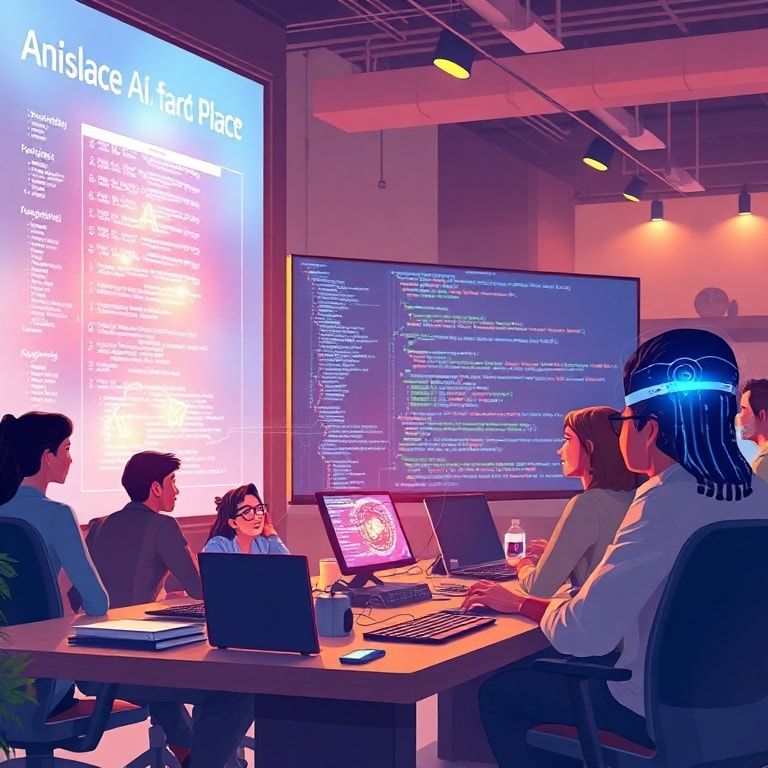
How to Start Exploring Self-Correcting Codebase Technology Today
If you are a developer, a technical leader, or someone building software products and you want to begin integrating these capabilities into your workflow without disrupting everything you already have, here is a practical approach.
Start by auditing your current pain points honestly. Where does your team lose the most time to debugging and maintenance? Which categories of bugs appear repeatedly? These are the areas where self-correcting tools will provide the most immediate and measurable value.
Introduce AI-assisted code review tools as a first step. Tools like GitHub Copilot Autofix or Snyk’s AI-powered vulnerability detection add a layer of automated correction suggestion without requiring any fundamental change to your existing workflow.
Build a culture of working alongside AI suggestions rather than either blindly accepting them or reflexively rejecting them.
Train your team to evaluate AI-proposed corrections critically, which actually sharpens their debugging skills rather than eroding them.
Document the patterns of errors that your AI tools catch most reliably. Over time this documentation becomes a powerful resource for understanding your codebase’s specific weak points and for evaluating the performance of the tools you are using.
Stay genuinely curious about the research happening in this space. The gap between academic research in self-healing software systems and production-ready commercial tools is closing faster than most people realize.
Conclusion: The Code That Learns From Its Own Mistakes
We started this conversation with me standing in front of a dashboard full of errors on an unremarkable Tuesday evening, wishing the code could just fix itself.
We have covered a tremendous amount of ground since that opening.Self-correcting codebases represent one of the most genuinely transformative applications of artificial intelligence in software engineering. They are not a solution to every problem.
They are not a replacement for experienced human developers. They are not yet fully autonomous in most production contexts.
But they are real, they are growing more capable at a remarkable pace, and they are already saving development teams measurable hours and preventing real errors from reaching real users.
The question for anyone reading this is not whether self-correcting code systems will become a standard part of software development. That outcome seems increasingly certain.
The question is whether you will be someone who understands these systems deeply enough to use them with skill and judgment, or someone who encounters them without the context to evaluate them critically.
I know which side of that line I want to be on. And I suspect, given that you read this far, you already know which side you want to be on too.Start exploring. Start learning.
The code is already learning. It is a good idea to keep up.
Tags: self correcting codebase AI, how does AI fix bugs automatically, self healing software systems, AI automated code correction tools 2026, machine learning bug detection in software, autonomous code repair artificial intelligence, future of software debugging with AI, AI tools for automatic error correction in code, self-correcting programs using machine learning, how AI improves code quality automatically
About the Author: A software developer and technical writer with over a decade of hands-on experience building production systems and watching the artificial intelligence landscape reshape everything he thought he knew about writing code. He writes about AI, development tools, and the future of software for developers who want to stay genuinely informed rather than just impressed.
Leave a Reply